
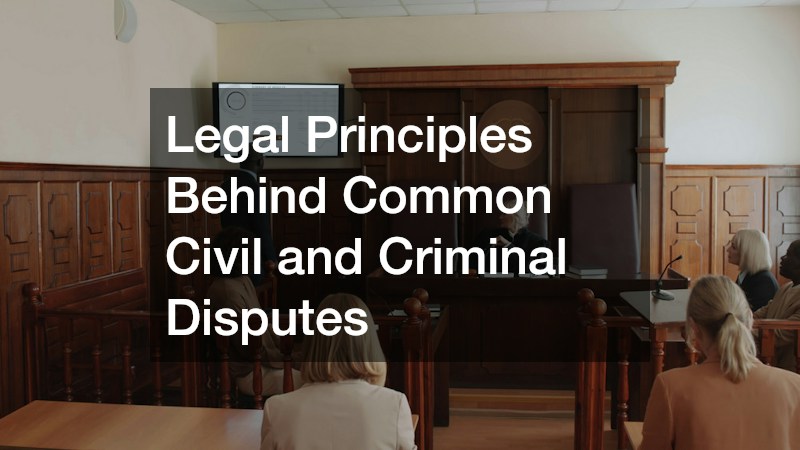
Legal disputes can arise from disagreements between individuals, conflicts involving businesses, allegations of wrongdoing, or questions about legal rights and responsibilities. Although these situations can look very different, courts generally rely on established legal principles to determine what happened, which laws apply, what evidence is relevant, and what remedies may be available.
Civil and criminal matters also serve different purposes. Civil proceedings generally address disputes between parties and may result in financial compensation, court orders, or other remedies. Criminal proceedings involve allegations that someone violated a criminal law and can result in penalties imposed by the government. Understanding these distinctions can make complicated legal issues easier to follow.
Recognize the Legal Issues in Domestic Disputes

Domestic disputes can involve overlapping civil and criminal concerns. Allegations of abuse may lead to criminal proceedings, while a separate court process may address protective orders, custody, housing, or other related issues. The specific procedures depend on the laws and court rules in the applicable jurisdiction.
A domestic violence attorney may address the legal consequences of alleged conduct while helping a party understand what happens during the relevant court proceedings. Evidence can become particularly important when the parties disagree about what occurred. Records created close to the time of an incident may help establish a timeline or provide context for the court.
Useful information may include:
- Copies of relevant court orders or notices
- Messages, emails, photographs, or other records
- Medical or emergency-service documentation
- Names and contact information for potential witnesses
- A written timeline of significant events
Protective orders also create enforceable legal obligations. Once an order is entered, understanding its specific restrictions matters because violating an order can create additional legal consequences. Parties should follow the exact terms of an existing order rather than relying on informal agreements or assumptions about what is permitted.
Establish Liability Before Pursuing Injury Claims
Personal injury disputes generally require more than showing that someone was hurt. A claimant may need to establish that another party had a legal duty, failed to meet that duty, and caused the injury in question. The circumstances surrounding the incident therefore matter just as much as the resulting medical condition.
A personal injury law firm may evaluate evidence related to the accident, the parties involved, the claimant’s conduct, and the losses that followed. Causation is particularly important because an injury must generally be connected to the conduct being alleged. Pre-existing conditions or multiple contributing events can make that analysis more complicated.
Important evidence may include:
- Medical records and treatment documentation
- Photographs of injuries or property damage
- Accident reports and incident records
- Statements from people who witnessed the event
- Employment records showing lost income
Damages can also extend beyond immediate medical expenses. Depending on the circumstances and applicable law, a claim may involve other economic or non-economic losses. Comparative fault rules may also affect recovery when the injured party is alleged to have contributed to the incident. Evaluating each part of the claim separately helps distinguish actual legal issues from assumptions about responsibility.
Protect Original Works Through Intellectual Property Law
Copyright disputes center on legally protected creative works and the rights associated with them. A dispute may arise when someone reproduces, distributes, displays, performs, or creates certain derivative material without the authorization required under applicable law. Determining whether infringement occurred requires examining both the protected work and the conduct involving it.
Copyright lawyers may evaluate questions involving ownership, registration, licensing agreements, and the nature of the allegedly unauthorized use. Simply finding similar material does not necessarily resolve every copyright dispute. The parties may disagree about ownership, authorization, originality, or whether an exception applies.
When evaluating a potential dispute, it can be useful to identify:
- Who created the original work
- When the work was created and published
- Whether ownership was transferred or licensed
- What portion of the work was allegedly used
- How the disputed material was used
Documentation can be especially valuable. Original files, contracts, licensing records, publication dates, and communications may help establish how rights were created or transferred. Because copyright law contains specific rules and exceptions, the legal analysis depends heavily on the facts rather than simply on whether two works appear similar.
Evaluate Contract Disputes by Reviewing the Agreement

Contract disputes often turn on the obligations the parties actually accepted. Before determining whether one party failed to perform, it is necessary to identify the relevant agreement, understand its terms, and determine what each party was required to do.
A breach of contract dispute may involve missed payments, incomplete performance, delayed performance, failure to provide agreed services, or another departure from contractual obligations. The wording of the agreement can become particularly important when the parties interpret a provision differently. Amendments, attachments, incorporated documents, and later written agreements may also affect the analysis.
A careful review should identify:
- The parties bound by the agreement
- Specific performance obligations
- Payment terms and deadlines
- Conditions that must occur before performance
- Provisions addressing disputes or remedies
Evidence of the parties’ conduct can provide additional context. Invoices, receipts, emails, project records, and other communications may help establish what occurred after the contract was signed. The consequences of a breach can also vary depending on the agreement and applicable law. Possible remedies may include monetary damages or other forms of relief, but the availability and amount of a remedy depend on the circumstances of the dispute.
Address Competing Claims Involving Estates
Estate disputes can develop when beneficiaries, family members, fiduciaries, or other interested parties disagree about property, documents, or the administration of an estate. These disputes may involve questions about whether a will or trust is valid, whether someone exercised improper influence, or whether estate assets were handled appropriately.
Estate litigation often requires close attention to documents and the circumstances surrounding their creation. A dispute may become more complicated when multiple versions of a will exist or when questions arise about the person’s understanding or intentions when a document was executed.
Relevant information may include:
- Wills, trusts, amendments, and related documents
- Financial records and account information
- Communications involving beneficiaries or fiduciaries
- Evidence concerning the person’s circumstances when documents were created
- Records showing how estate property was managed
The role of an executor, trustee, or other fiduciary can also become a central issue. These individuals may have specific responsibilities concerning estate property and administration. When someone challenges the handling of an estate, the court may need to examine both the governing documents and the conduct of the person responsible for administering the assets. Procedural requirements and filing deadlines can also affect how a dispute moves forward.
Understand the Legal Basis for Disability Claims
Disability proceedings involve more than establishing that a person has a medical condition. The legal question generally centers on whether the condition meets the applicable requirements for disability and whether the available evidence supports the claimed limitations.
A Social Security disability attorney may evaluate medical documentation, work history, functional limitations, and other information relevant to the claim. Consistency can be important because statements about a person’s abilities may be considered alongside medical records and employment information.
Documentation may include:
- Treatment records from relevant medical providers
- Information about medications and ongoing care
- Employment history and job responsibilities
- Descriptions of functional limitations
- Statements explaining how limitations affect daily activities
The distinction between having a diagnosis and meeting a legal definition of disability is important. Medical evidence can provide essential information, but the legal evaluation focuses on how the condition affects the person’s ability to meet the applicable requirements.
Establish Fault in Serious Commercial Vehicle Collisions

Truck accidents can involve more complicated liability questions than many ordinary vehicle collisions. The driver may be one source of responsibility, but other parties can potentially become relevant depending on the circumstances. Determining liability therefore requires examining the entire sequence of events.
A truck accident attorney may investigate driver conduct, vehicle condition, maintenance records, company practices, and other evidence related to the collision. The purpose is not simply to identify who was present but to determine what conduct or condition contributed to the accident and resulting losses.
Evidence may include:
- Police and accident reports
- Photographs or video from the collision
- Driver records and communications
- Vehicle inspection and maintenance records
- Statements from witnesses
Causation remains central to the analysis. Even when a party appears to have acted improperly, the evidence must connect that conduct to the collision or resulting injuries. Multiple contributing factors can make this more difficult.
Evidence preservation is also important because records can become unavailable over time. Identifying relevant documents, photographs, electronic information, and physical evidence early can help create a more complete account of what happened.
Apply the Best Interests Standard in Custody Disputes
Child custody disputes focus on parenting arrangements and the interests of the child rather than simply on which parent wants a particular outcome. Courts generally consider factors established by the applicable jurisdiction when making decisions about custody and parenting time.
Child custody lawyers may address questions involving legal custody, physical custody, parenting schedules, and proposed changes to existing arrangements. The specific factors considered by a court vary, but issues involving stability, safety, parental involvement, and the child’s needs can become important.
When evaluating a custody dispute, it can help to organize:
- Existing court orders and parenting agreements
- School and activity schedules
- Records concerning significant parenting responsibilities
- Communications between the parents
- Information relevant to proposed schedule changes
A court order remains important while a dispute is pending. A parent should not assume that a disagreement automatically permits changes to an existing arrangement. Following the applicable order while using the proper legal process to request a modification can prevent additional complications.
Understand the Difference Between Criminal Charges and Civil Claims
Criminal and civil proceedings can sometimes arise from the same underlying event, but they serve different legal purposes. A criminal case involves the government alleging that a person committed a crime, while a civil case generally concerns a dispute between private parties or another claim for legal relief.
A criminal lawyer may address issues involving charges, hearings, pleas, evidence, trial procedures, and sentencing. The government generally carries the burden of proving the charged offense under the applicable criminal standard. The accused also has procedural and constitutional rights that shape how the case proceeds.
Important distinctions include:
- Criminal cases can result in criminal penalties
- Civil cases can result in financial or other civil remedies
- Different burdens and standards of proof can apply
- The parties and procedures are not necessarily the same
- One event can sometimes lead to both types of proceedings
An allegation is also not the same as a finding of guilt. Criminal proceedings provide a process through which allegations are tested against applicable legal standards and evidence. Understanding that distinction is essential when evaluating information about an ongoing case.
Recognize When Financial Distress Leads to Chapter 11

Bankruptcy law provides different legal mechanisms for addressing financial distress. Chapter 11 generally involves restructuring rather than simply ending a business’s operations and distributing its remaining property. The process can affect the debtor, creditors, contracts, assets, and ongoing business decisions.
Chapter 11 bankruptcy proceedings can involve substantial interaction between the debtor and the bankruptcy court. Creditors may have claims that must be addressed through the bankruptcy process, while the debtor may propose a plan for dealing with its financial obligations.
Key concepts include:
- Identifying and classifying creditor claims
- Determining how existing obligations will be addressed
- Developing a proposed restructuring plan
- Providing required information to affected parties
- Seeking court approval of the proposed plan
The interests involved can be different and sometimes directly opposed. A business may seek flexibility to continue operating, while creditors may focus on recovering amounts they are owed. The bankruptcy process establishes procedures for addressing those competing interests.
Civil and criminal disputes may involve very different circumstances, but each depends on established legal principles and procedures. Courts must evaluate the facts, identify the applicable law, consider the available evidence, and determine what rights, responsibilities, or remedies apply to the dispute before them.
Understanding these principles can make complex legal disputes easier to evaluate. It also highlights why documentation, accurate timelines, applicable court rules, and the specific language of governing documents can matter so much. While every dispute depends on its own facts and applicable law, recognizing the legal framework provides a useful starting point for understanding how courts approach competing claims and responsibilities.
