

A car accident creates immediate confusion, even when the damage appears minor. In the moments after a crash, decisions are made quickly, but those early actions often determine how smoothly insurance claims are processed, how liability is established, and whether compensation is fully recovered later. Many people focus only on vehicle damage, but the legal and medical steps taken immediately afterward can be just as important as any repair.
Understanding the correct sequence of actions helps protect both health and financial stability. From documenting injuries and gathering evidence to communicating with insurers and repair professionals, every step contributes to building a clear record of what happened and who is responsible.
Prioritizing Safety and Medical Documentation at the Scene
After a collision, the priority is always health and safety. Even if injuries seem minor, adrenaline can mask symptoms that appear hours or even days later. Taking the right medical steps immediately helps protect both physical recovery and legal rights.
In serious accidents, calling for emergency medical care ensures that trained professionals can evaluate injuries on-site and determine whether hospital treatment is necessary. This early response is also important for creating an official medical record tied directly to the incident.
Even when emergency transport is not required, visiting a doctor as soon as possible is essential. Many injuries, such as whiplash, soft tissue damage, or mild concussions, are not immediately obvious but can worsen without treatment.
Key actions at this stage include:
- Calling emergency services if there is any doubt about injury severity
- Requesting a full medical evaluation even if symptoms seem minor
- Reporting all pain, discomfort, or unusual sensations clearly to providers
- Following up with additional medical visits if symptoms develop later
- Keeping all medical documentation, discharge papers, and prescriptions
Medical records are critical evidence in establishing the connection between the accident and injuries, especially in insurance claims or legal disputes.
Documenting Vehicle Damage and Repair Needs
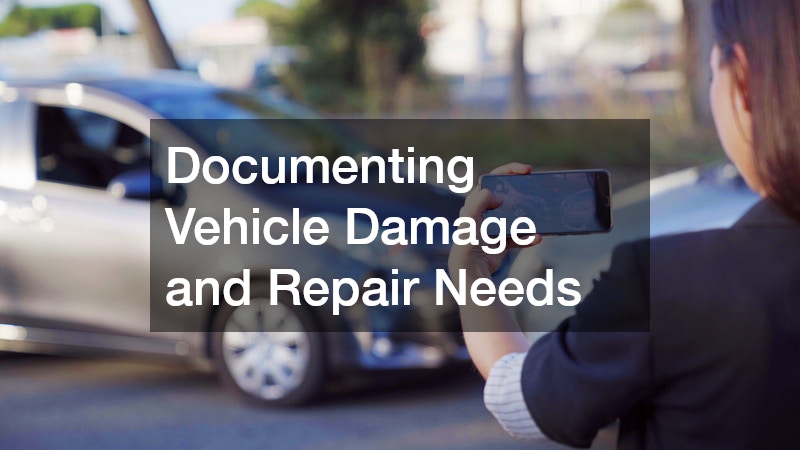
Once safety is addressed, attention shifts to documenting property damage. Accurate records help support insurance claims and ensure that repair costs are fully accounted for during settlement discussions.
Proper documentation should begin at the scene whenever possible. Photographs and written notes help establish the extent of damage before any changes are made to the vehicle.
When moving into the repair phase, working with reputable providers is essential. Choosing qualified auto repair services ensures that both visible and hidden damage is properly assessed and documented. In many cases, repair estimates become key evidence in insurance negotiations.
Important documentation steps include:
- Taking photos of all vehicle angles, including close-ups of damage
- Capturing the surrounding accident scene and road conditions
- Recording the time, date, and location of the incident
- Keeping copies of initial and revised repair estimates
- Saving all communication with repair professionals
Additional considerations:
- Hidden structural damage may not appear in initial inspections
- Repair timelines can affect rental car coverage and insurance reimbursement
- Incomplete estimates can lead to undervalued insurance payouts
Accurate documentation strengthens both insurance claims and any potential legal case by clearly showing the extent of loss.
Selecting Qualified Repair Facilities and Understanding Complex Damage
Choosing the right repair facility after an accident is not just a matter of convenience—it can significantly affect both safety and long-term vehicle performance because modern vehicles are engineered with tightly integrated systems where structural, mechanical, and electronic components all depend on one another. A repair that appears visually complete may still conceal unresolved issues that affect drivability, safety systems, or long-term reliability. For this reason, selecting a qualified provider of auto repair services is a critical part of protecting both the vehicle’s value and the driver’s safety.
Not all repair providers have the same level of expertise, especially when modern vehicle systems are involved. Today’s cars often rely on advanced driver-assistance systems, computerized diagnostics, and complex wiring harnesses that require specialized knowledge and equipment. A shop that primarily handles cosmetic bodywork may not have the capability to properly recalibrate sensors or identify intermittent electrical faults that only appear under certain driving conditions.
Reliable auto repair shops will provide detailed diagnostics, transparent estimates, and proper certification for repairs. This level of professionalism typically includes step-by-step damage assessments, written explanations of required repairs, and clear separation between necessary repairs and optional cosmetic upgrades. This helps ensure that the vehicle is restored to safe operating condition rather than simply made to look repaired externally. It also reduces the risk of incomplete repairs that could lead to recurring issues after the vehicle is returned to use.
In modern vehicles, damage often extends beyond visible body issues. Even a relatively low-speed collision can disrupt wiring connections, misalign sensors, or damage control modules hidden behind panels or bumpers. Electrical systems, sensors, and onboard computers can be affected even in moderate collisions, sometimes producing delayed symptoms that do not appear until the vehicle is driven for several days. This is where specialized car electrical repair services become essential, as they address issues that standard mechanical repairs may overlook, such as recalibrating safety systems, diagnosing communication errors between modules, or restoring proper sensor alignment.
Key factors when selecting a repair provider:
- Certification and licensing for collision repair work indicate that technicians have met industry standards and are trained to handle structural and safety-related repairs correctly
- Experience with modern vehicle diagnostic systems, ensuring the shop can properly interpret onboard computer data and identify both obvious and hidden damage
- Transparency in pricing and repair timelines, so there are no unexpected cost increases or unclear delays during the repair process
- Warranty coverage for completed repairs provides assurance that the work performed is guaranteed and can be corrected if issues arise after completion
- Ability to coordinate directly with insurance companies, which helps streamline approvals, supplement requests, and documentation sharing between all parties involved
Signs of hidden damage that require attention should never be ignored, even if the vehicle appears to function normally at first glance:
- Warning lights appeared after the accident, especially those related to engine performance, airbags, braking systems, or stability control
- Electrical malfunctions or inconsistent system behavior, such as flickering lights, intermittent power loss, or malfunctioning infotainment systems
- Difficulty starting or operating vehicle features, which may indicate deeper electrical or mechanical disruptions caused by impact stress
- Sensor or camera system errors in newer vehicles, including lane assist, parking sensors, or adaptive cruise control systems that rely on precise calibration
Proper repair documentation is also important because insurance companies often rely on repair facility reports when approving or disputing claims. These records serve as an official account of the vehicle’s condition before and after repairs, helping establish whether all necessary work was completed and whether additional damage claims are justified.
Managing Insurance Claims and Understanding Valuation Processes
After medical and repair steps are underway, insurance becomes the central focus of the legal process because nearly every financial decision tied to the accident flows through the policy structure. Contacting an auto insurance agent early helps ensure that the claim is filed correctly and that deadlines are met, which is especially important because even small filing errors or missed timeframes can slow down the entire process or complicate eligibility for certain benefits. Early communication also helps establish a clear record of the incident while details are still fresh and verifiable.
Insurance representatives guide policyholders through coverage details, required documentation, and next steps, but their role is also procedural rather than advocacy-based. This means they help interpret policy language and facilitate claim submission, yet they are still operating within the insurer’s guidelines and financial constraints. However, it is important to understand that insurance companies also aim to limit payouts, so careful communication is necessary. This does not mean being uncooperative, but rather being precise, factual, and consistent when describing the accident, injuries, and damage.
One of the most important stages in this process is the insurance appraisal, which often becomes a turning point in the claim. Insurance appraisals determine the estimated cost of repairs or the value of a totaled vehicle by comparing damage assessments, market data, and repair labor calculations. These valuations directly affect how much compensation is offered, and even small differences in appraisal methodology can significantly change the final payout amount. For example, variations in labor rates, part sourcing (OEM vs aftermarket), or vehicle depreciation assumptions can all influence the final figure.
Key insurance considerations include:
- Understanding policy coverage types (liability, collision, comprehensive) so policyholders know what damages are eligible for compensation and under what conditions each coverage applies
- Reporting the accident promptly to avoid claim delays, since many policies require timely notification to maintain full coverage eligibility
- Providing accurate but limited factual statements about the incident, focusing on objective details rather than speculation or fault assumptions that could be misinterpreted later
- Submitting all repair and medical documentation promptly to ensure that adjusters have complete information when evaluating damages and expenses
- Reviewing appraisal reports carefully for accuracy, including checking listed damages, labor estimates, and vehicle valuation assumptions against independent repair quotes
When appraisal values seem too low, it is important not to accept the first figure without review, especially if repair shops or medical providers have submitted higher estimates. In these cases, several structured steps can help challenge or clarify the valuation:
- Request a second evaluation or independent appraisal, which may involve a third-party assessor who can provide a more neutral damage estimate
- Provide additional repair documentation from reputable facilities, especially if hidden damage or supplemental repairs were identified after the initial inspection
- Compare estimates from multiple repair facilities to establish a more realistic market-based cost range for repairs and parts
Clear communication with insurance representatives helps prevent misunderstandings that could delay or reduce compensation, particularly when all documentation is consistent, well-organized, and submitted in a timely manner.
Navigating Insurance Companies and Legal Escalation When Needed

As claims progress, interactions with insurance companies become more complex because the process shifts from simple reporting to detailed evaluation and negotiation. Large insurers, including Allstate Insurance, use structured systems that break claims into multiple review stages, often involving adjusters, medical reviewers, and valuation specialists. Each layer is designed to assess risk exposure and confirm documentation before approving payouts. While this structure improves consistency and speed, it also means claims are carefully controlled to reduce financial liability wherever possible.
During this stage, policyholders may begin to notice that communication becomes more formal and less flexible. Settlement offers are typically generated based on internal valuation models that consider repair estimates, medical billing codes, historical claim data, and liability assessments. However, these formulas do not always reflect the real-world impact of injuries, lost wages, or long-term treatment needs. Understanding how these offers are calculated is essential before accepting any payout, because once a settlement is signed, it generally closes the claim permanently.
Common challenges during insurance negotiations often emerge as the claim moves deeper into review:
- Initial settlement offers that are lower than expected repair costs, especially when the insurer relies on preferred repair networks or standardized pricing rather than local market rates
- Disputes over injury severity or treatment necessity, where insurers may question whether certain medical visits, therapies, or diagnostic tests are “reasonable” or directly related to the accident
- Delays in claim processing or communication gaps, which can occur when multiple departments handle different parts of the claim, leading to inconsistent updates or extended waiting periods
- Requests for additional documentation or recorded statements, which may be used to clarify details but can also be leveraged to identify inconsistencies in the claim narrative
As these challenges accumulate, the negotiation process can become increasingly difficult to manage without support. In more complex situations, consulting a car accident attorney may become necessary, particularly when the financial stakes are high or when liability is not clearly established. Legal representation often shifts the balance of communication, ensuring that the claimant is not navigating technical insurance procedures alone.
Situations where legal support is often beneficial include:
- Serious or permanent injuries requiring ongoing treatment, especially when future medical costs or long-term disability are involved
- Disagreements about fault or liability, where each party’s version of events is contested, and evidence interpretation becomes critical
- Insurance claim denials or low settlement offers, particularly when the insurer refuses to adjust valuation despite additional documentation
- Multiple parties are involved in the accident, which increases complexity due to shared liability, overlapping insurance policies, and conflicting statements
When a legal representative becomes involved, the structure of the claim process often changes significantly. A car accident attorney can communicate directly with insurance companies, reducing the risk of misinterpretation or pressure on the injured party. They can also negotiate settlement amounts based on full damages, which may include not only vehicle repair and medical expenses but also lost income and future treatment needs.
Additionally, legal counsel can gather additional evidence to support claims, such as expert testimony, accident reconstruction analysis, or detailed medical evaluations that strengthen the overall case. They also ensure legal deadlines and procedures are properly followed, which is critical because missing filing deadlines or procedural requirements can weaken or even invalidate portions of a claim.
When legal escalation is involved, documentation from medical providers, repair facilities, and insurance appraisals becomes even more critical in building a strong case, as every record helps establish a clear and defensible timeline of damages, treatment, and financial impact.
Conclusion
After a car accident, the steps taken in the hours and days that follow play a major role in determining both physical recovery and financial outcome. From immediate medical attention and careful documentation to repair decisions and insurance communication, each stage contributes to the strength of a claim.
Staying organized, acting promptly, and understanding how insurance and legal systems interact helps ensure that no critical detail is overlooked. While the process can feel overwhelming, approaching it methodically provides the best chance of recovering both health and fair compensation.
